
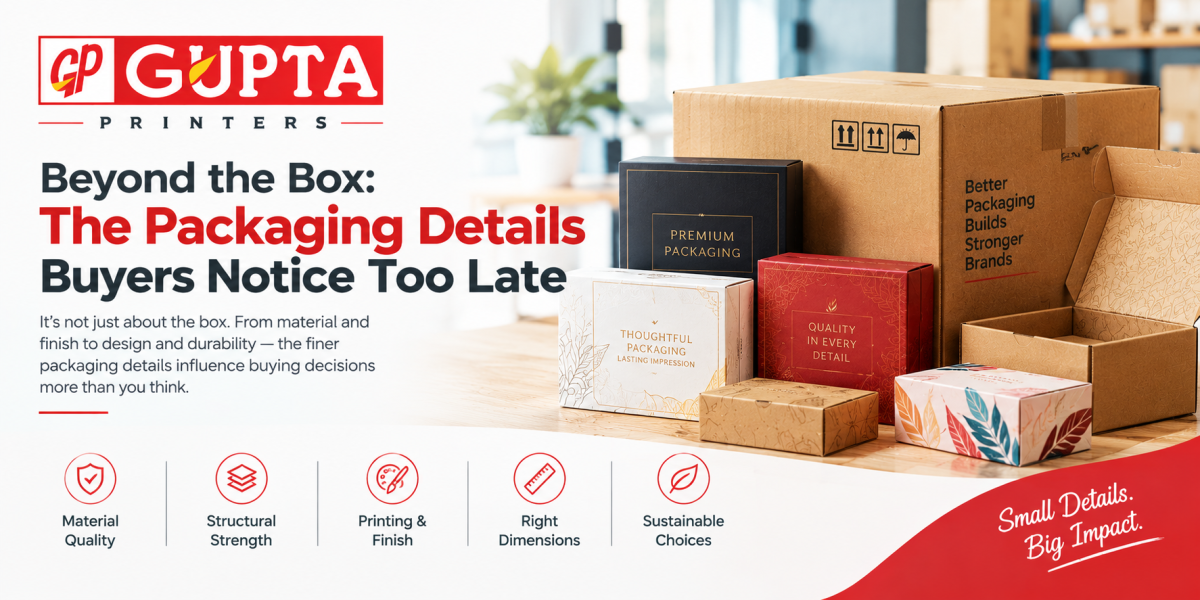
Packaging decisions often appear straightforward: select the right material, finalize the dimensions, approve the artwork and place the order. Yet, many packaging problems become visible only after production begins. A box may have the correct size but poorly positioned artwork. A label may look fine on screen but become difficult to scan after printing. A closure may work during sampling but slow down bulk packing.
For procurement teams, these late-stage problems can mean rework, delays and unnecessary costs. Working with an experienced Packaging Box Manufacturer helps businesses identify these details before they become production issues.
Why Packaging Problems Often Appear Too Late
Packaging passes through several stages before reaching the customer: packaging design, specification, artwork approval, printing, finishing, conversion, packing and dispatch. A decision made at one stage can affect the next.
For example, choosing a particular packaging box dimension without considering the product’s actual fit can create excess movement inside the carton. Also, approving packaging artwork without checking folds and cutting lines can place important information in the wrong position.
The objective should be more than producing attractive packaging boxes. Buyers need packaging that works correctly throughout production, handling and distribution.
1. Align Artwork With Box Structure
Packaging artwork should be developed around the actual box structure, not approved solely as a flat digital design. Once a box is cut, folded, glued and assembled, the position of logos, text and graphics can change in relation to the visible panels.
Before approving packaging printing, procurement teams should verify bleed areas, fold lines, cutting guides, safe zones, logo placement and barcode positioning. This is particularly important for custom boxes with multiple panels, intricate graphics or limited space for mandatory product information.
Reviewing the dieline and assembled mock-up together can help prevent avoidable box printing corrections.
2. Prioritize Product Fit and Dimensions
Providing length, width and height is not always enough to establish the right box size. Buyers must clarify whether the measurements refer to internal or external dimensions and account for the product’s actual shape, orientation and packing method.
When preparing packaging specifications, consider clearance, protective inserts, dividers, folding space and closure requirements. A box that fits the product’s external measurements exactly may leave insufficient room for cushioning or make packing unnecessarily difficult.
Effective custom packaging solutions begin with the product’s dimensions and handling requirements.
Explore The Gupta Printers’ rigid boxes for customizable sizes and designs that ensure product fit, protection, and premium presentation.
3. Maintain Print Alignment
Before approving box printing, businesses should communicate their expectations. Artwork containing fine borders, multiple colours or graphics extending across adjoining panels requires particular attention.
These expectations also apply to packaging printing for cartons, paper bags, labels and promotional materials. Approving a production sample and establishing clear quality expectations can help businesses identify discrepancies before the full order proceeds.
For buyers sourcing custom packaging solutions, consistent printing supports a unified brand identity across product ranges and repeat orders.
4. Finalize Finishes Early
Finishing choices should be considered alongside material selection, artwork and printing requirements. Lamination, stamping, UV effects and other surface treatments can influence the final appearance of a package and may affect how artwork needs to be prepared.
When finalizing packaging design, buyers should discuss the intended appearance, material compatibility and finishing requirements with their supplier. They should also confirm which areas require a particular treatment and whether the finish needs to be reviewed on a physical sample.
For custom boxes, coordinating the structure, material, print and finish from the beginning makes the production brief clearer and reduces the likelihood of late-stage changes.
5. Plan Labels and Stickers
Stickers and labels may carry product details, batch numbers, prices, barcodes, promotional messages or variant information. Buyers should confirm their dimensions, material, adhesive suitability and placement to ensure they do not cover important graphics, cross folds or interfere with opening the package.
For example, an FMCG manufacturer managing several flavours or sizes may need custom labels that clearly distinguish each SKU while maintaining a consistent visual identity. A cosmetics brand may require coordinated custom sticker printing for different product variants without changing the core packaging design.
Planning custom label printing alongside the box helps businesses coordinate information across cartons, bottles, secondary packaging and retail materials. This is especially useful when multiple SKUs share a common packaging structure but require different product details.
For More information on this, refer Stickers and Labels.
6. Verify Barcode Readability
Barcode readability depends on more than including the correct code in the artwork. Size, contrast, print clarity and placement all influence whether scanning equipment can read it reliably.
For retail, FMCG and warehouse operations, print stickers and custom labels may be scanned during receiving, inventory management, billing and dispatch. A barcode that appears clear on screen may become less readable after printing, finishing or application to the final package.
The best approach is to test the barcode on a physical production sample using an appropriate scanner. Reviewing stickers and labels in their final printed and applied condition helps identify issues before bulk distribution begins.
7. Check Closure and Usability
Packaging must work efficiently for the people assembling, filling, closing and handling it. A visually attractive box may still cause delays if its tabs are difficult to fold, adhesive areas are poorly positioned or the closure requires excessive effort.
Before ordering packaging boxes, procurement teams should assess the assembly sequence, ease of access, closure security and compatibility with the packing process.
When reviewing packaging solutions, involve warehouse or production staff in sample testing. Their feedback can reveal practical issues that marketing teams or purchasing departments may overlook during visual approval.
8. Ensure Bulk Production Consistency
Approving one sample does not automatically guarantee that every unit in a bulk order will match it. Differences in material, colour, print registration, cutting, finishing or folding can affect the consistency of the final batch.
For a Packaging Box Manufacturer, quality control should extend from raw material inspection through production monitoring to final verification. Buyers should discuss the supplier’s inspection process and agree on how defects or deviations will be handled before confirming a large order.
Packaging Details Before Production
Before approving any custom packaging solutions, procurement teams should confirm:
| Area | What to check |
| Dimensions | Internal/external size, product fit and clearance |
| Material | Board or paper type and intended application |
| Artwork | Bleed, folds, safe areas and text positioning |
| Printing | Colour, alignment and print requirements |
| Finishing | Lamination, UV, stamping or other finishes |
| Labels | Size, material, adhesive and placement |
| Barcode | Size, contrast and final readability |
| Closure | Folding, tabs, adhesive and usability |
| Quantity | Required volume and SKU-wise quantities |
| Quality | Inspection and consistency requirements |
| Delivery | Production and dispatch timeline |
These packaging specifications should be documented before the purchase order is finalized. Doing so gives the supplier a clearer production brief and reduces last-minute changes.
The Gupta Printers: Beyond Boxes
The Gupta Printers offers a diverse range of packaging formats, including corrugated and cardboard boxes, rigid boxes, garment cartons, food boxes, pharmaceutical boxes, cosmetic boxes, electronics boxes and other industry-specific packaging. Our range also covers paper bags, stickers and labels to support varied business requirements.
4 Reasons to Choose The Gupta Printers
- Diverse Packaging Range: Corrugated, rigid, food, garment, pharmaceutical, cosmetic and electronics boxes.
- Integrated Printing Services: Packaging printing, custom labels, stickers and finishing options.
- Custom Paper Bag Options: Multiple sizes and handle styles to suit retail and branding needs.
- Coordinated Packaging Support: Multiple packaging components managed to support consistent branding and smoother production planning.
With different sizes and styles, including flat-handle and rope-handle options, its paper bags packaging can be planned to align with a brand’s product presentation and retail needs.
For businesses sourcing multiple packaging components, coordinating custom label printing, custom sticker printing and box printing through one experienced packaging partner can improve communication, streamline production planning and support consistency across packaging materials.
Final Takeaway
A capable Packaging Box Manufacturer should be evaluated not only on the box itself but also on its ability to understand packaging artwork, dimensions, printing, finishing, labels and production requirements.
If you are planning custom packaging solutions, discuss your product dimensions, artwork, labels, printing and quantity requirements early. The Gupta Printers can help coordinate the packaging and printing requirements needed for your next bulk order.
Get your packaging right from artwork to production. Talk to The Gupta Printers for custom boxes, labels and printing.
FAQs
- What should buyers check before ordering packaging boxes?
Buyers should verify dimensions, material, artwork, printing, finishes, labels, barcode placement, closure and bulk production requirements before placing an order. - Why is packaging artwork important before production?
Packaging artwork must account for folds, cutting lines, bleed, safe areas, text, logos and barcodes to prevent errors during printing and conversion. - How can businesses ensure consistent box printing?
Businesses should approve production-ready artwork, define colour and alignment expectations, review samples and work with a Packaging Box Manufacturer that follows quality checks. - When should labels and stickers be finalized?
Custom labels and stickers should be finalized alongside the box design to ensure proper placement, readability, branding consistency and barcode functionality. - What packaging specifications should buyers confirm?
Key packaging specifications include dimensions, material, artwork, printing, finishing, labels, closure, quantity, quality requirements and delivery timelines.
