
Introduction
When sourcing shirt packaging boxes in bulk, many apparel brands and wholesale buyers assume that a thicker board automatically means a stronger box.
In reality, this misconception often leads to box failures, higher costs, transit damage, and retail rejections.
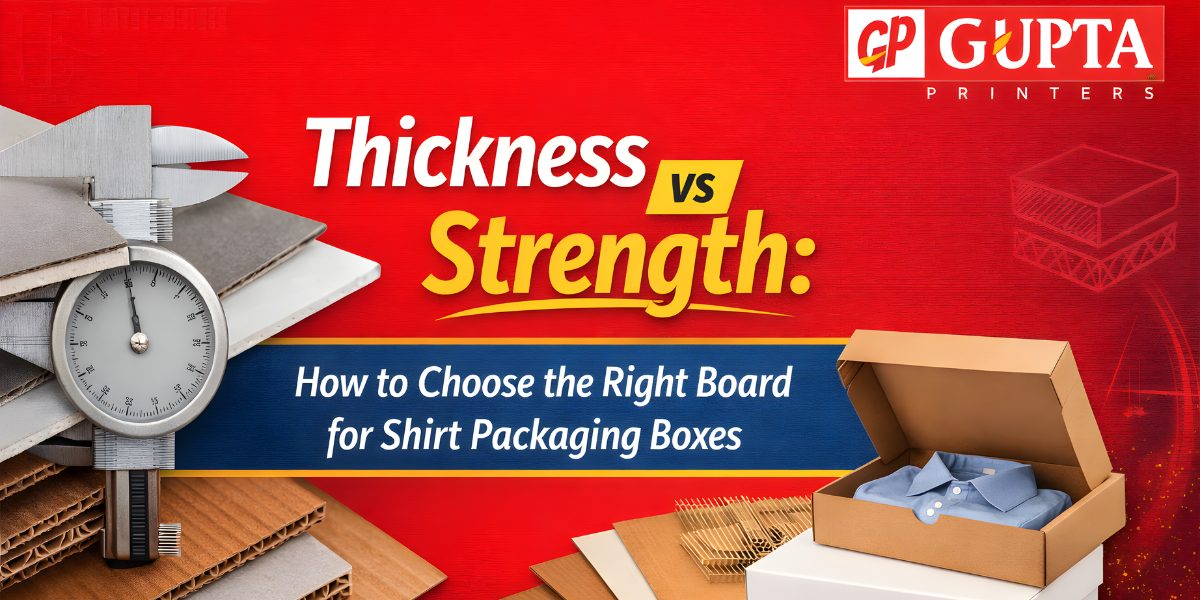
Choosing the right board for shirt packaging boxes is not about thickness alone — it’s about structural strength, material composition, and load performance.
This guide explains the technical difference between thickness and strength, helping B2B buyers select the right shirt box packaging for durability, branding, and cost efficiency.
Why Board Selection Matters in Shirt Box Packaging
Shirt boxes are not just display packaging — they must:
- Maintain shape during stacking
- Protect garments during transport and storage
- Withstand humidity and handling
- Meet retail presentation standards
Incorrect board selection results in:
- Boxes collapsing in bulk stacks
- Warping during monsoon seasons
- Creases cracking at fold lines
- Increased returns and repacking costs
For wholesale orders, even a small board mistake scales into large financial loss.
Thickness vs Strength: Understanding the Difference
What Is Board Thickness?
Board thickness refers to the physical caliper of the packaging board — how thick the sheet feels when touched.
Common misconception:
“Thicker board = stronger shirt box”
This is not always true.
What Is Board Strength?
Board strength defines how well a shirt packaging box can:
- Resist compression
- Hold weight during stacking
- Maintain shape over time
- Survive transportation stress
Strength is influenced by:
- GSM (Grams per Square Meter)
- Paper fiber quality
- Layer construction
- Bursting strength
- Edge crush resistance
- Moisture resistance
A well-engineered thinner board can outperform a poorly made thicker board.
Why Thicker Shirt Boxes Fail in Bulk Orders
Many wholesale buyers face failures even after choosing thick boards. Common reasons include:
Low Fiber Quality
Cheap boards use recycled fibers with weak bonding, reducing actual load strength.
Poor Layer Construction
Thickness achieved by bulk fillers instead of structured layers leads to bending and sagging.
Incorrect Grain Direction
Wrong grain orientation weakens folding points, causing cracks and deformation.
Climate Sensitivity
Thicker boards absorb moisture faster if not treated properly, especially in Indian conditions.
Key Board Types Used in Shirt Packaging Boxes
Solid Board (Paperboard)
- Smooth surface
- Ideal for premium printed shirt boxes
- Strength depends on GSM and fiber density
Duplex Board
- White top with grey back
- Cost-effective for bulk shirt packaging
- Must be chosen carefully for stacking strength
Corrugated Board (Micro Flute)
- Used for export or long-distance shipping
- High compression resistance
- Not always suitable for retail display
Choosing the wrong board type leads to misfit lids, weak walls, and poor shelf appearance.
GSM vs Strength: What Wholesale Buyers Should Know
GSM indicates paper weight, not strength alone.
For shirt packaging boxes:
- Low GSM + good fiber = better performance
- High GSM + poor fiber = heavier but weaker box
Wholesale buyers should always ask manufacturers about:
- Bursting strength
- Load capacity
- Stack height tolerance
- Humidity resistance
How Board Strength Impacts Retail Presentation
Weak shirt boxes cause:
- Uneven stacking on shelves
- Sunken lids
- Visible creases and dents
Retail chains often reject packaging that:
- Loses shape
- Appears premium in sample but weak in bulk
- Fails visual merchandising standards
Strong board selection ensures brand consistency across thousands of units.
Cost Implications of Wrong Board Selection
Choosing thickness over strength leads to:
- Higher transportation damage
- Increased rejection rates
- Reprinting and repacking costs
- Loss of brand perception
Smart buyers focus on cost per usable box, not cost per sheet.
How Professional Manufacturers Ensure Strength Without Over-Thickening
Experienced shirt box manufacturers:
- Engineer boards for load performance
- Balance GSM with fiber strength
- Test compression and folding durability
- Customize board based on shirt weight and box size
This results in lighter, stronger, and more cost-efficient shirt packaging solutions.
How to Choose the Right Board for Your Shirt Packaging Boxes
Wholesale buyers should evaluate:
- Shirt weight and folding style
- Box dimensions
- Stack height during storage
- Transportation distance
- Climate exposure
Always request:
- Technical board specifications
- Strength test reports
- Bulk performance assurance
Final Thoughts
In shirt packaging boxes, thickness is visible — strength is functional.
Bulk buyers who understand this difference gain long-term cost savings, fewer failures, and stronger retail presence.
Choosing the right board is not a guess — it’s a technical decision that separates average packaging from professional packaging.
FAQs
- Is thicker board always better for shirt boxes?
No, strength depends on fiber quality, GSM, and board structure — not thickness alone. - Which board is best for premium shirt packaging?
High-quality solid board with proper GSM and strength testing works best. - Why do bulk shirt boxes collapse even when thick?
Poor fiber bonding, wrong grain direction, and humidity absorption are common causes. - What should wholesale buyers ask manufacturers before ordering?
Ask about board strength, load capacity, moisture resistance, and bulk testing. - Does climate affect shirt packaging box strength?
Yes, humidity significantly impacts board performance if not properly treated.
