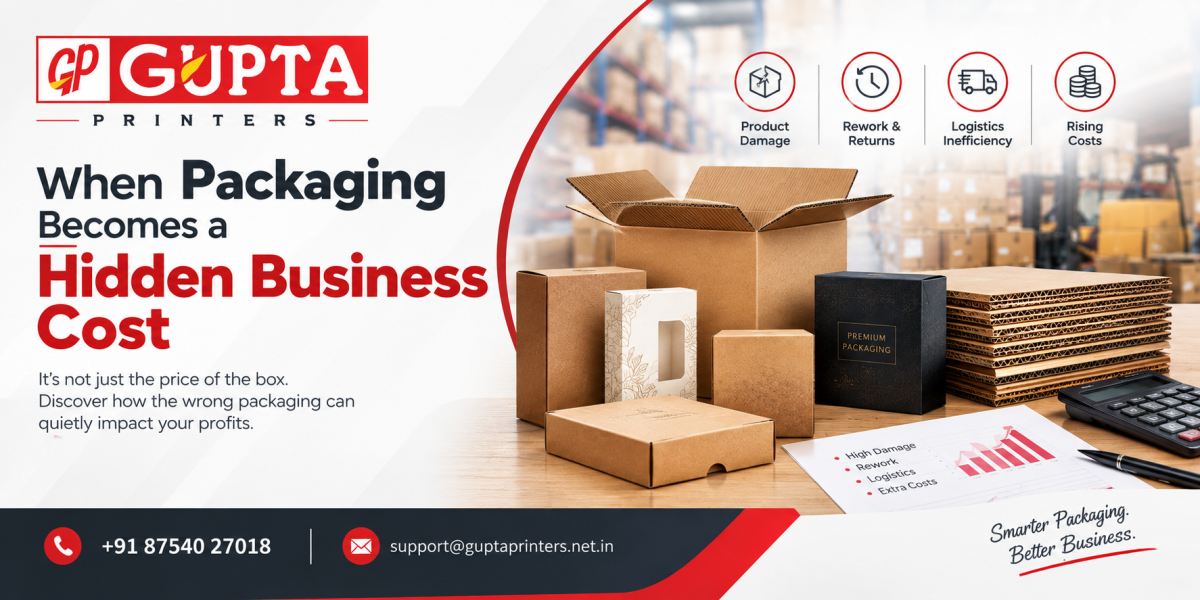
For many businesses, packaging decisions begin with one simple question: “How much does each box cost?” While unit price matters, it does not represent the complete cost of packaging. For procurement managers, manufacturers, exporters, retailers, FMCG brands and e-commerce businesses, packaging should therefore be evaluated as part of the total cost of doing business.
A correctly specified packaging box manufacturer can help businesses evaluate material, dimensions, construction, printing, finishing and production requirements according to the product and distribution conditions.
The real question is not simply whether a box is inexpensive. It is whether the packaging specification helps control the overall cost from production to delivery.
What Is the Real Cost of a Packaging Box?
The purchase price is only the first component of packaging expenditure. The actual cost can include:
- Packaging material cost
- Manufacturing and printing
- Storage of empty cartons
- Warehouse handling
- Transportation and freight
- Protective fillers and additional materials
- Product damage
- Returns and replacements
- Packaging waste
- Labour required for assembly and packing
- Obsolete inventory caused by changing specifications
This means a low-cost packaging box can become expensive if it is oversized, structurally unsuitable or difficult to handle.
For example, reducing board quality may lower the initial quotation, but if the resulting carton collapses during transportation, the business may incur product replacement, reverse logistics and customer service expenses. Conversely, selecting unnecessarily heavy material can increase the packaging material cost without providing meaningful additional protection.
The objective should be specification optimisation, not simply price reduction.
When Material Selection Creates a Hidden Packaging Cost
Material selection directly affects packaging performance and expenditure.
For corrugated boxes, factors such as liner GSM, flute configuration, board construction and required strength need to correspond with the product weight, stacking conditions and transportation environment. Selecting a stronger construction than necessary may increase material consumption, while under-specifying the board can increase the possibility of transit damage.
The same principle applies to cardboard boxes used for garments, cosmetics, food products and retail packaging. The material should provide the required rigidity, appearance and protection without unnecessary over-engineering.
This is why working with a knowledgeable box manufacturer is important. Material decisions should be based on the application rather than a standard specification applied to every product.
How Oversized Boxes Increase Shipping and Storage Costs
One of the most overlooked sources of packaging expenditure is unnecessary box size. An oversized carton can create several costs simultaneously:
More board → more material cost → more empty space → more warehouse volume → lower vehicle utilisation → higher shipping costs.
When the product occupies only part of the carton, businesses may also need additional protective material to prevent movement inside the box.
For exporters and e-commerce companies, dimensions can be particularly important because freight charges may depend not only on actual weight but also on the space occupied during transportation.
Oversized packaging boxes can also reduce warehouse efficiency. More empty cartons occupy more racks, pallets and floor space, potentially increasing the storage requirement for packaging inventory.
Right-Sizing as a Packaging Cost Reduction Strategy
Right-sizing means designing the carton around the actual product and its protection requirements. A correctly sized carton can help reduce:
- Unnecessary board consumption
- Internal void space
- Protective filler usage
- Warehouse footprint
- Transportation volume
- Handling complexity
However, right-sizing should not mean making the box as small as possible. Sufficient clearance must remain for product protection, packing operations and safe handling. The ideal solution balances product protection, packaging efficiency and logistics requirements.
When Box Design Adds Cost Instead of Value
Packaging design affects more than appearance. A structurally complicated carton may require additional components, special die-cutting, more assembly time or additional manufacturing stages.
If those features do not provide a meaningful functional or commercial advantage, they can increase the overall packaging cost. Businesses should therefore evaluate:
- Internal dimensions
- Closure method
- Folding structure
- Assembly requirements
- Stackability
- Product fit
- Die-cutting requirements
- Printing areas
- Finishing requirements
Custom boxes can be particularly useful when the product has unusual dimensions or specific protection requirements. The value of custom packaging solutions is therefore not limited to branding. Proper customisation can help eliminate unnecessary material, improve product fit and make the packaging easier to handle.
Printing and Finishing Can Become Hidden Expenses
Printing and finishing can significantly influence the final quotation. Depending on the product, businesses may require:
- Multi-colour printing
- Premium artwork
- Lamination
- Die-cutting
- Special finishes
- Metallic effects
- Windows
- Additional surface treatments
These features may be justified for premium cosmetics, confectionery, retail products or branded consumer packaging. However, adding unnecessary finishing to a transit carton can increase expenditure without improving operational performance. The right approach is to separate functional requirements from decorative requirements.
For example, a premium cosmetic brand may use enhanced printing and finishing because packaging presentation contributes to the customer experience. A pharmaceutical carton may prioritise information clarity, consistency and product protection. A shipping carton may instead prioritise strength and logistics efficiency.
Product Damage Can Cost More Than the Box
One of the most expensive hidden packaging problems occurs when the carton is unable to protect the product throughout its journey.
Consider a simple cost chain:
Inadequate packaging → product damage → rejected shipment → replacement → reverse logistics → additional packaging → customer dissatisfaction.
This can make a slightly more expensive box financially preferable if it significantly reduces damage risk.
Food Packaging
Food products may require appropriate structural strength, fit and protection against handling conditions. Gupta Printers offers dedicated cake, pastry, sweet, ice cream and pizza packaging formats.
Garment Packaging
Garments require packaging that supports presentation, handling and storage while avoiding unnecessary bulk. Saree, shirt and other garment-specific formats can be designed around product dimensions and branding requirements.
Cosmetics Packaging
Cosmetic products may combine fragile containers with premium presentation requirements. An appropriately designed carton can balance protection, product fit and visual appeal.
Electronics Packaging
Electronic products may require stronger structural protection and careful internal sizing to minimise movement during handling and transportation.
Pharmaceutical Packaging
Pharma products require consistent specifications and appropriate packaging construction. Gupta Printers provides dedicated pharma box solutions as part of its product portfolio.
Across these industries, transit damage can become far more expensive than a small difference in the initial box quotation.
Packaging Waste Is Also a Business Cost
Packaging waste is not limited to discarded cartons. Waste can occur when businesses purchase:
- Oversized cartons
- Excessively heavy material
- More protective filler than necessary
- Unused printed inventory
- Packaging for discontinued products
- Incorrectly specified cartons
- Excess stock because of inefficient ordering
This increases both the direct material expense and the indirect cost of handling, storing and disposing of unused packaging.
For businesses pursuing sustainable packaging, material optimisation should therefore be considered alongside environmental objectives. Using the appropriate board construction and reducing unnecessary dimensions can support both resource efficiency and commercial efficiency.
The goal is not simply to use less material. It is to use the right amount of material for the required performance.
Storage Efficiency Matters More Than Buyers Think
Empty cartons consume warehouse space before a product is even packed.
This becomes especially important for businesses managing multiple SKUs. Different dimensions, designs and seasonal requirements can quickly increase packaging inventory. Poorly planned packaging solutions can create:
- Higher storage requirements
- More handling
- Lower rack utilisation
- SKU complexity
- Overstocking
- Obsolete printed stock
A better approach is to review carton dimensions, order quantities and product demand together. Packaging efficiency should therefore be measured not only by how quickly a carton can be produced, but also by how efficiently it can be stored, assembled, packed and transported.
How Bulk Quantity and Specifications Influence Packaging Cost
Packaging quotations depend on more than box dimensions. Order quantity, material specification, printing, finishing, tooling, structural design and production requirements can all influence pricing.
For bulk buyers, this makes specification planning particularly important.
Ordering large volumes of an incorrectly designed carton can lock the business into unnecessary packaging waste. On the other hand, a carefully planned bulk order can support consistent production and reduce the frequency of emergency purchases.
Businesses should therefore discuss expected quantities, dimensions, materials and usage conditions with their supplier before finalising a bulk order.
How to Achieve Packaging Cost Reduction Without Buying Cheaper Boxes
Effective packaging cost reduction does not necessarily mean choosing the lowest quotation. Instead, buyers should optimise the complete specification.
1. Right-Size the Carton
Match the internal dimensions to the product while allowing sufficient protection and packing clearance.
2. Optimise Material
Select the appropriate GSM, flute and board construction based on product weight, stacking and transportation conditions.
3. Simplify Where Possible
Avoid complicated structures, excessive components and unnecessary finishing when they do not add functional value.
4. Improve Packaging Efficiency
Consider how cartons will be assembled, stacked, stored, loaded and transported before finalising the design.
5. Reduce Unnecessary Waste
Avoid purchasing excessive packaging inventory or using oversized cartons that require additional protective materials.
6. Evaluate Total Cost
Compare suppliers based on product protection, consistency, storage, freight and operational requirements—not simply the quoted unit price.
Practical Packaging Cost Checklist for Buyers
Before placing a bulk packaging order, procurement teams should ask:
| Buyer Question | Cost Issue Addressed |
| Is the box correctly sized? | Material, freight and storage |
| Is the material specification appropriate? | Over-specification |
| Is the board strong enough for the journey? | Transit damage |
| Is there excessive empty space? | Shipping costs |
| Is the structure easy to assemble? | Labour |
| Are printing requirements necessary? | Printing expenditure |
| Is premium finishing required? | Finishing cost |
| Can cartons be stacked efficiently? | Warehouse space |
| What is the minimum order quantity? | Inventory cost |
| How consistent is bulk production? | Rejections and replacements |
| Can the specification be optimized? | Overall packaging cost |
| Does the packaging support sustainable packaging goals? | Waste and material efficiency |
This checklist can help procurement teams move from price-based purchasing to value-based packaging decisions.
Why the Right Packaging Box Manufacturer Matters
The right supplier should do more than manufacture cartons to a given specification. They should help businesses translate product, handling, branding and logistics requirements into an appropriate packaging structure.
The Gupta Printers offers 21 packaging categories, including corrugated, rigid, saree, cake, pharma, liquor, pizza, cosmetic and electronics boxes. We also state that packaging can be customized by size, shape, colour, print finish and artwork and manufactured in-house at its Sivakasi facility.
For businesses purchasing in bulk, this application-focused approach can help align packaging material cost, product protection, packaging efficiency and logistics requirements.
With industry experience dating to 1950, we serve multiple sectors across India and provide custom packaging options for businesses with different product and branding requirements.
Get a Custom Packaging Quote
The cheapest box is not always the cheapest packaging solution. A box that uses excessive material, occupies unnecessary warehouse space, increases freight volume or fails during transportation can cost considerably more after all associated expenses are considered.
The better approach is to evaluate the complete packaging lifecycle, from material selection and dimensions to manufacturing, storage, transportation and product protection.
If you are looking for a packaging box manufacturer for bulk requirements, Gupta Printers can help you evaluate packaging based on your product dimensions, quantity, material requirements, printing needs and application.
Get in touch with The Gupta Printers today for a customized packaging quote designed around your product, quantity and business requirements.
FAQs
- What are the hidden costs associated with packaging boxes?
Hidden packaging costs can include excess material usage, oversized dimensions, storage space, higher shipping costs, product damage, replacements, packaging waste, handling and inefficient packing operations.
- How can the right packaging box reduce overall business costs?
The right packaging box can reduce costs through proper sizing, material optimisation, improved product protection, better stacking, reduced packaging waste and more efficient transportation.
- Why is choosing the cheapest packaging box not always cost-effective?
A low-priced box may use unsuitable materials or dimensions, increasing the risk of transit damage, product replacements, storage requirements and higher shipping costs. Total packaging cost should be considered instead of unit price alone.
- How does box size affect packaging and shipping costs?
Oversized packaging requires more material, occupies additional warehouse space and may increase dimensional shipping costs. Right-sized packaging can improve packaging efficiency while reducing unnecessary material and transportation expenses.
- How can businesses choose the right packaging box manufacturer?
Businesses should evaluate a manufacturer’s material options, custom sizing, structural design, printing and finishing capabilities, quality control, bulk-order capacity and ability to develop packaging according to specific product and logistics requirements.